— THE CHECKLIST —
A Infection control principles
B Cleaning versus disinfection
C Barrier setup, in order
D Sharps handling
E Aftercare and Victorian guidance
Home — Training Resources — Hygiene & Safety
— GUIDE / STUDIO PRACTICE —
Tattoo Hygiene and Safety Basics for New Artists
A fine line can look perfect and still be unsafe. Every tattoo breaks the skin, so hygiene is part of the craft, not a separate job. This guide covers the habits a new artist should build from day one, before any machine touches skin.
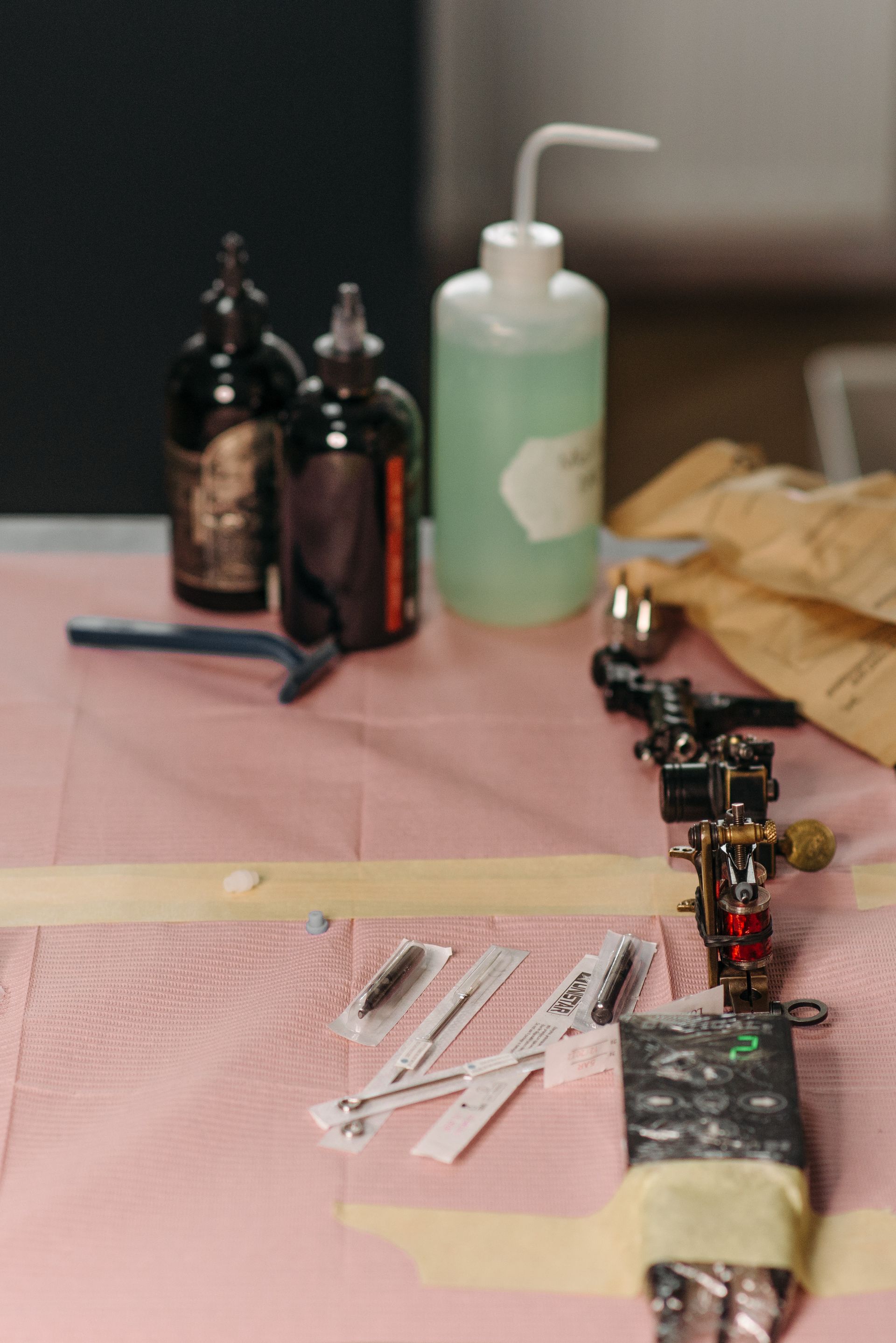
Reference photograph: a covered workstation with sealed needles and cleaning supplies
— A / PRINCIPLES —
Break the chain before it starts
Infection control rests on one idea: treat blood and body fluids from every client as potentially infectious. You cannot see a blood-borne virus, so the same precautions apply to every client, every session.
In practice that means clean hands before gloves, fresh gloves whenever you touch something outside the prepared field, single-use items used once and thrown away, and nothing that has touched broken skin going back into a shared container. Ink is decanted into single-use caps, not dipped from the bottle.
The hardest part is cross-contamination through small habits: adjusting a lamp, picking up a phone or touching your mask with a working glove. Good artists plan the space so those moments never need to happen.
— B / TERMS THAT MATTER —
Cleaning, disinfection and sterilisation
These words are often used as if they mean the same thing. They don’t, and the order matters.
Cleaning
Removes visible dirt, grease and organic matter with detergent and water. It always comes first, because disinfectant can’t work properly through residue.
Disinfection
Reduces germs on a cleaned surface to a safer level. Use a product suited to the surface and follow the label for dilution and contact time.
Sterilisation
Destroys all micro-organisms, including spores. It applies to reusable items that break the skin. This is why most artists now choose pre-sterilised single-use needles and grips.
— C / BARRIER SETUP —
Set the station in order
Barriers only protect you if they go on a clean surface and cover everything your gloved hand will touch mid-session.
— i Clean, then disinfect the work surface, chair, armrest and lamp handles.
— ii Wash hands and put on fresh gloves before laying down barrier film and a clean work sheet.
— iii Wrap the machine, clip cord or battery, and the spray bottles you’ll reach for.
— iv Open sealed needles and set out single-use items only when you’re ready to use them.
— v After the session, bin barriers and consumables, dispose of sharps, then clean and disinfect again.
— D / SHARPS —
Handle needles as if they're live
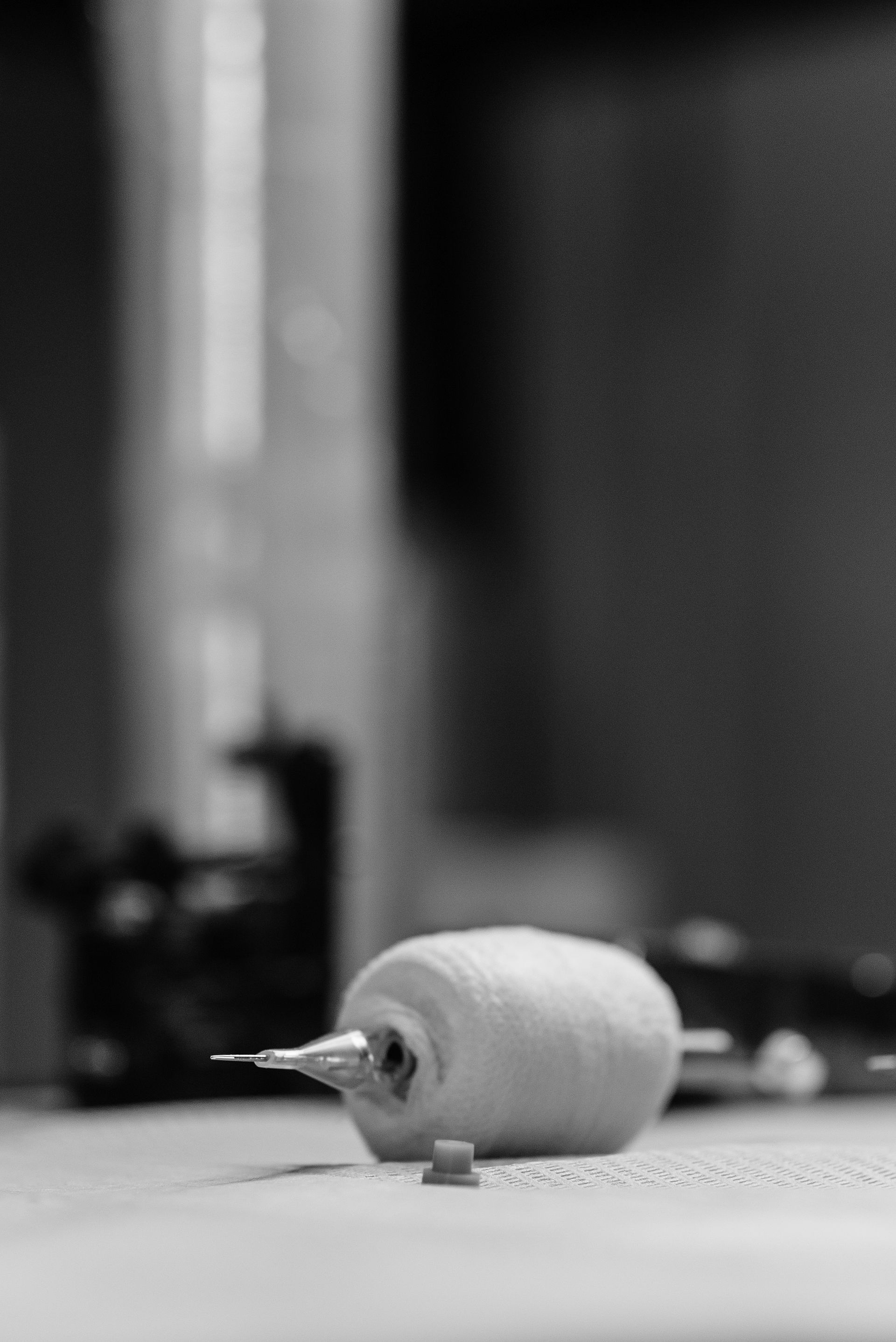
Most needlestick injuries happen after the tattoo is done, when attention drops. Keep an approved sharps container within arm’s reach. Drop used cartridges straight in, never recap or bend them, and never overfill the container.
If you do get a needlestick, stop work. Wash the area with soap and water, and get medical advice promptly. Knowing this routine before you need it is part of being ready to tattoo.
— E / AFTER THE CHAIR —
Aftercare is a conversation, not a leaflet
Fine line work heals best when the client knows exactly what to do. Explain the dressing and when to remove it, how to wash gently with clean hands, and why they shouldn’t pick or soak the tattoo. Tell them which signs mean they should see a doctor, such as spreading redness, heat, swelling or fever. Then give them the same advice in writing to take home.
In Victoria, tattooing is regulated as a skin penetration activity. Before you work on clients, read the Victorian Department of Health guidance on infection prevention for tattooing and skin penetration, and check with your local council about business registration. Treat official guidance as the standard, and this article as an introduction.
To practise these routines with guidance, see Tattoo Hygiene & Safety Training. You can also start with the Beginner Fine Line Tattoo Course, or contact us with a question.