Home — Training Resources — Fine Line Tattooing
— GUIDE / TECHNIQUES —
What Is Fine Line Tattooing? A Complete Guide
Fine line tattooing is a style built on restraint: slim, even lines, soft detail and plenty of open skin. It looks simple on the arm and is one of the most exacting styles to learn. This guide explains what defines it, how it differs from traditional line work, and what anyone learning it should understand about design, placement and healing.
— IN THIS GUIDE —
i The visual style
ii Fine line vs traditional line work
iii Designs and placements
iv Healing and longevity
v Learning the style
— i / THE STYLE —
A style defined by the line itself
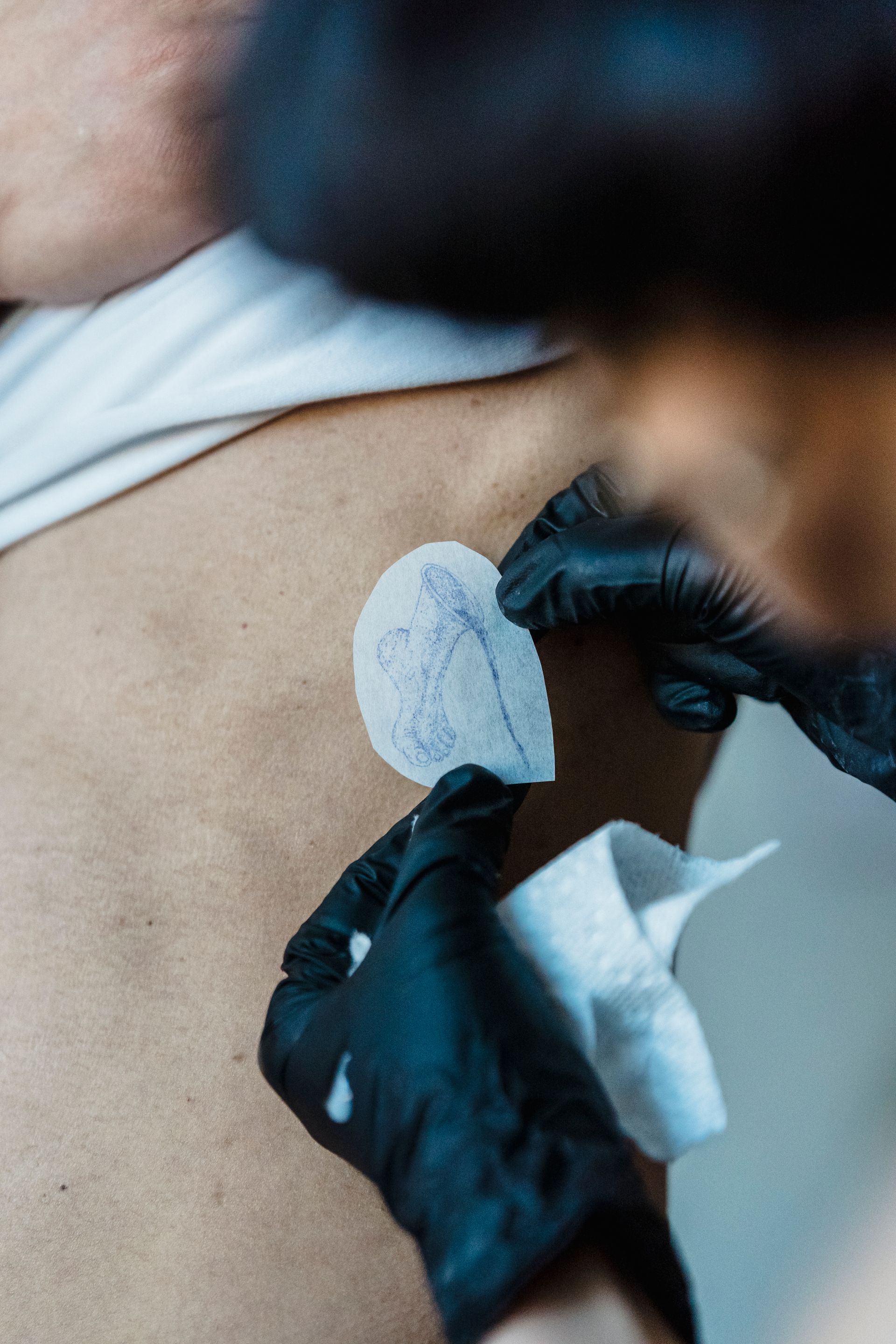
Fine line tattoos use delicate, consistent lines with little or no heavy shading and no bold outline. The artwork depends on precision, not contrast: botanical studies, script, small symbols, geometric forms and single-line figures, often in black or grey.
Because there is so little ink, every decision shows. A wobble, an uneven depth or a line that stops a touch early can’t be hidden under shading. That is why the style rewards steady hands, careful stretching and a clear understanding of how the needle meets skin.
— ii / COMPARISON —
Fine line vs traditional line work
Both styles depend on clean lines. They simply ask different things of them.
Fine line
— Slim, even lines carry the whole design
— Detail and negative space over contrast
— Little margin for error in depth or speed
— Often smaller, quieter compositions
Traditional line work
— Bold outlines frame colour and shading
— Strong contrast readable from a distance
— Heavier lines hold shape as skin ages
— Suits larger, graphic designs

— iii / DESIGN & PLACEMENT —
Designs and placements that suit fine line
Good fine line work starts on paper. Designs that suit the style leave room between lines, so detail doesn’t crowd together as the tattoo settles.
— Botanical stems, leaves and single flowers
— Script and short lettering with open spacing
— Minimal symbols and geometric forms
— Continuous single-line figures
Placement matters as much as the drawing. Flatter, more stable areas such as the forearm, upper arm, collarbone or ribs tend to take fine lines well. Areas that flex, rub or see heavy wear, like fingers and the sides of hands, are harder on delicate work. Scale and flow are covered in depth in the Fine Line Tattoo Design Course and our guide to designing for fine line tattoos.
— iv / HEALING & LONGEVITY —
How fine lines heal and age
All tattoos soften over time, and fine lines show it sooner because there is less ink to hold the shape. How well a piece lasts depends on consistent depth, sensible spacing in the design, a suitable placement, the client’s skin and how carefully aftercare is followed.
For artists, that means longevity is decided in the studio: lines placed too shallow can fade patchily, while lines pushed too deep can blur. Clean practice and clear aftercare advice protect the result, which is why Tattoo Hygiene & Safety Training runs alongside technique. Clients with specific skin or health concerns should always seek professional advice.
— v / LEARNING THE STYLE —
Where to begin
If you are new to tattooing, the Beginner Fine Line Tattoo Course builds the basics of line control before anything else. If you want the full discipline from drawing to application, the Fine Line Tattoo Course is our main Melbourne program. Questions first? Reach us through the contact page.