— 05 / MACHINE —
Tattoo Machine Training
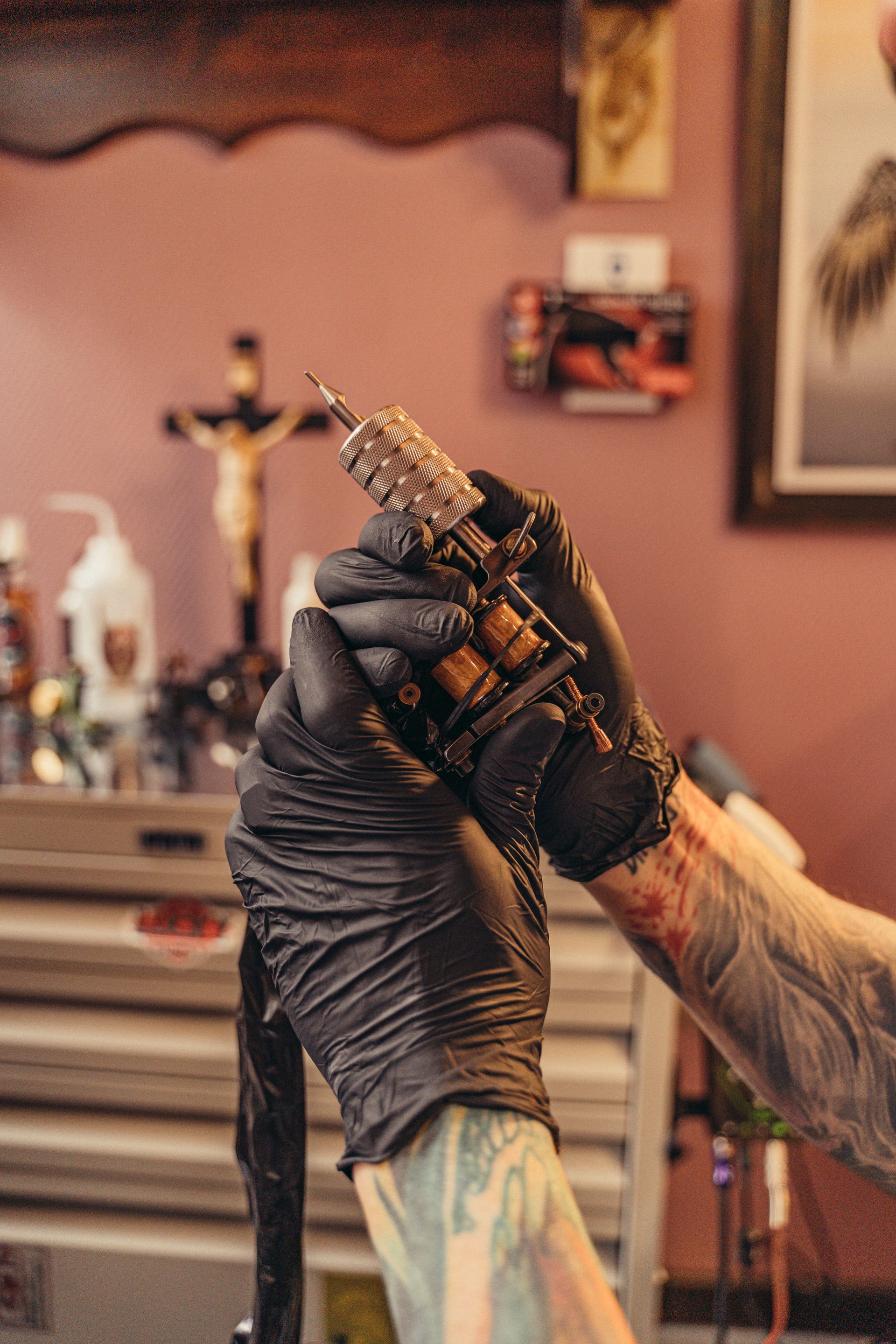
A fine line is only as steady as the machine behind it. This Melbourne course teaches you to set up, hold and control a tattoo machine so the line you planned is the line that goes into the skin. It’s clean, even and consistent from the first mark to the last.
— SCOPE OF TRAINING —
— Machine types, explained in general terms
— Setup before every session
— Grip, stretch and hand speed
— Fixing problems with line quality
— 05.1 / CONTROL —
From the machine on the bench to a line in the skin
The training moves through four stages of control. Each one removes a variable, so by the time you pull a line, the machine is doing exactly what your hand tells it to.
STAGE ONE
Machine types
How rotary, pen-style rotary and coil machines differ in feel, weight and how they run. The aim is to understand the tool, not to favour a brand.
STAGE TWO
Setup
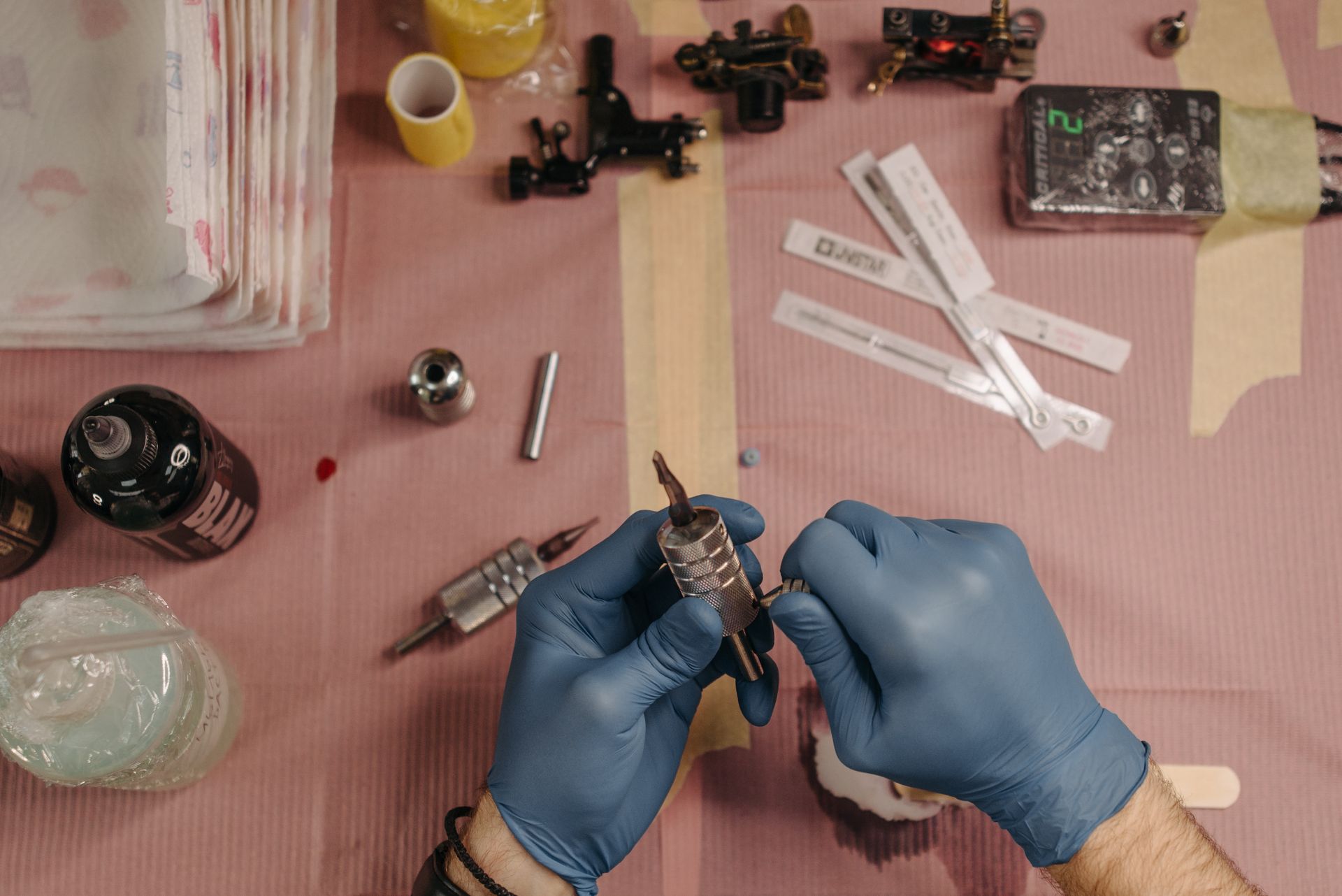
Connecting the power supply, fitting cartridges and checking how the machine runs before each session, with barrier protection in place from the start.
STAGE THREE
Grip & hand speed
A relaxed, anchored grip, a steady stretch and a hand speed that matches the machine. This is where fine lines stop wobbling.
STAGE FOUR
Troubleshooting
Reading a line after it’s pulled, working out whether the problem was the machine, the needle or the hand, and correcting it on the next pass.
— 05.2 / LINE QUALITY —
Reading a faulty line
Most line problems come from a handful of causes. You’ll learn to spot them on practice skin before they reach a client. For background reading, see our guide Tattoo Machines for Fine Line: Rotary, Pen and Coil.
Shaky or wandering lines
Usually a problem with grip, anchoring or hand speed. We rebuild your posture and pull in a steady rhythm so the machine glides instead of dragging.
Skipped or patchy lines
Often caused by moving too fast for how the machine is running, a loose stretch or an inconsistent angle. You’ll learn to match machine settings to your hand speed.
Blurred or spreading lines
Usually linked to depth, angle or overworking an area. We focus on light, confident passes and a consistent needle angle.
Uneven line weight
Often a mix of pressure changes and needle choice. This is where machine training overlaps with Needle & Technique Training.
— 05.3 / WHO & HOW —
Who it suits
— Beginners who have started with line drills and want real control of the machine
— Artists moving from coil to rotary or pen-style machines
— Working tattooists whose fine lines aren’t yet consistent
Structure and format
The training is practical and follows the four stages above, from setup to troubleshooting, with guided practice and feedback throughout. We’ll talk through course length, dates and inclusions for your level when you make an enquiry. If you’re completely new, start with the Beginner Fine Line Tattoo Course.
— 05.4 / QUESTIONS —
Machine training questions
Do I need my own machine?
Mention it in your enquiry. We’ll explain what’s needed for your course and how different machine types compare, so you can make an informed choice later.
Do you recommend a particular brand?
No. We teach how machines work and how to control them, so your skills carry over to whatever equipment you use.
Is hygiene covered in this course?
Clean setup and barrier protection are part of every session. For full infection control and safe studio practice, take Tattoo Hygiene & Safety Training as well.
How does this fit with the main course?
Machine control is one discipline within the Fine Line Tattoo Course. This course lets you focus on it in more depth. You can see the full list of courses on our courses page, or send us a question through the contact page.
— RELATED DISCIPLINES —
06 Needle & Technique Training: choosing needles and controlling fine line technique
07 Tattoo Hygiene & Safety Training: infection control and safe studio practice
— How to Pull Clean Tattoo Line Work: related reading