Home — Training Resources — Tattoo Career Guides
— GUIDE / CAREER —
Tattoo Career Guide: From Training to Working Artist
Finishing a course is where the real work starts. Getting from training to working artist takes a portfolio that shows real control, patient conversations with studios, a clear sense of the work you want to make and habits that keep you improving. No course can promise you a studio chair. What you can follow is a clear path, and this guide walks through each stage.
— IN THIS GUIDE —
01 Building a portfolio
02 Finding studio opportunities
03 Specialising in fine line
04 Ongoing skill development
05 Professional conduct
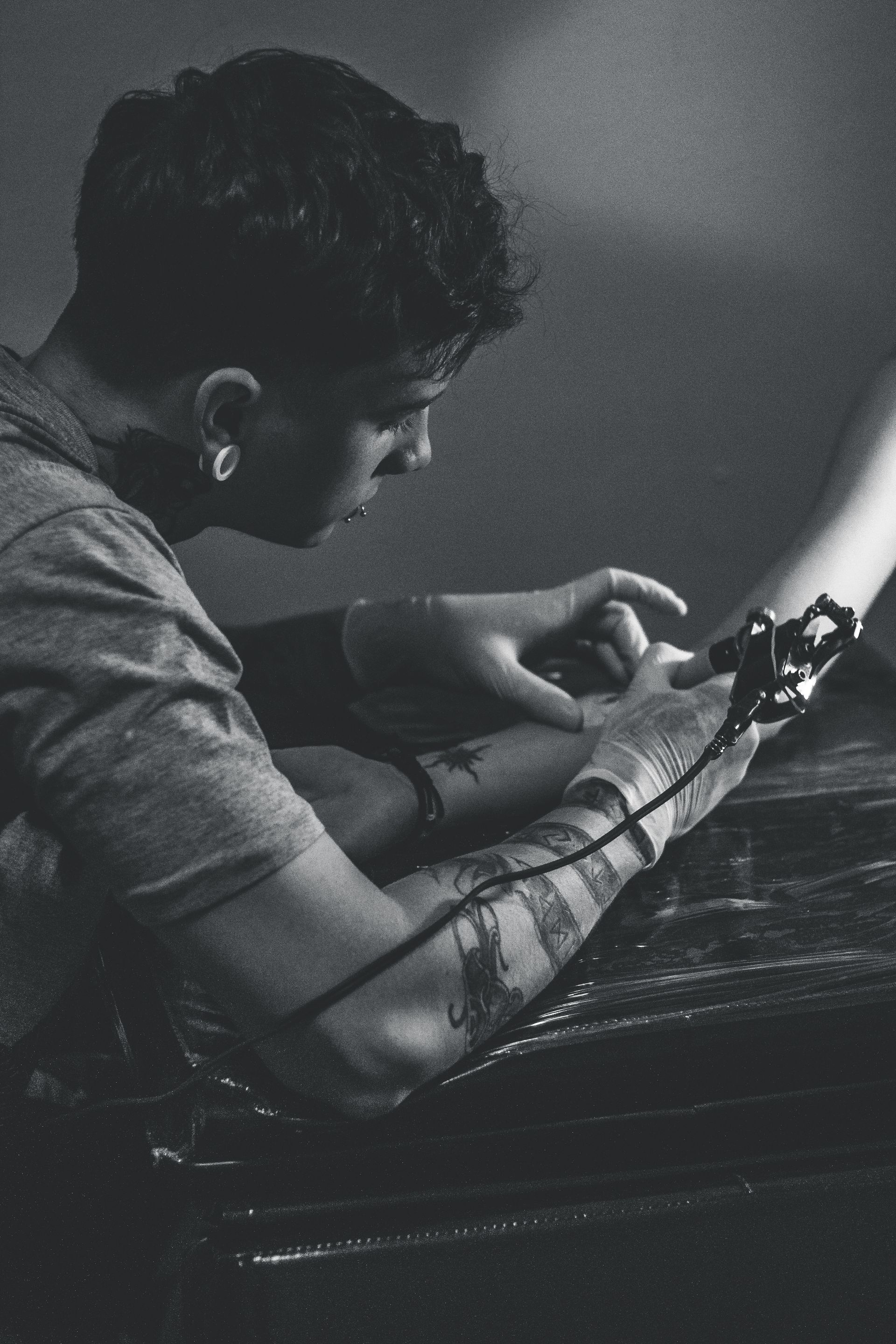
Reference photograph: an artist working on a forearm, side view
— 01 / PORTFOLIO —
Build a portfolio that proves control
Studios look at a portfolio to judge one thing: can this person be trusted with skin? For fine line work that means steady, consistent lines, a sense of scale and designs that suit the body. Ten strong pieces say more than forty uneven ones.
— Show original drawings next to the finished work, so your design thinking is visible.
— Include practice skin line drills. They show discipline, not just finished pieces.
— Photograph healed work where you can, in even light and without heavy filters.
— Keep it focused on the style you want to be hired for.
If your lines still wobble or blow out, fix that before you build the folio. Our guide to pulling clean tattoo line work sets out a practice routine.
— 02 / STUDIOS —
Finding studio opportunities
Most working artists get their start through relationships, not job ads. Get to know the studios whose work sits close to yours. Visit in person when they’re quiet, bring a printed or tablet portfolio, and ask what they look for rather than asking for a job straight away. Expect to start with front-of-house, setup and cleaning duties while you earn trust. How long that lasts depends on the studio and on you.
Before you tattoo anyone in Melbourne, check the current registration and premises requirements with your local council and Victorian health guidance. A studio that takes compliance seriously is a better place to learn.

Reference photograph: design cards laid out beside a drawing tablet
— 03 / SPECIALISM —
Specialising in fine line
Fine line is unforgiving. Every tremor shows, and there’s nowhere for a heavy hand to hide. That’s exactly why a focused specialism can set you apart. Clients who want delicate botanicals, script or minimal linework look for artists whose portfolio is full of it.
Specialising means going deep on scale, placement and how thin lines settle as they heal. Fine Line Tattoo Design builds the drawing side. Advanced Fine Line Training is for people who already tattoo and want sharper precision and finer detail.
— 04 / DEVELOPMENT —
Ongoing skill development
— Draw every day, even when you’re booked.
— Review your healed work honestly and note what drifted.
— Revisit your machine and needle setup as your hand develops.
— Take further training when you hit a clear plateau.
— 05 / CONDUCT —
Professional conduct
— Treat hygiene as part of the craft, every session. See Tattoo Hygiene & Safety Training.
— Give clear consultations and say no to designs that won’t hold at that size.
— Respect other artists’ designs and credit your references.
— Be reliable with time, aftercare advice and studio rules.
— RELATED READING —
Measure your next step.
Not sure which course fits where you are now? Compare the courses hub, or send a note through our contact page.