Home — Training Resources — Tattoo Needles
— GUIDE / TOOLS —
Tattoo Needles Explained for Fine Line Work
The machine drives the needle, but the needle makes the line. How the needle points are grouped, how tightly they sit and how the cartridge or bar is built all affect whether a fine line reads crisp, soft or uneven once it heals. This guide covers the basics in plain terms, plus the handling habits that keep every session safe.
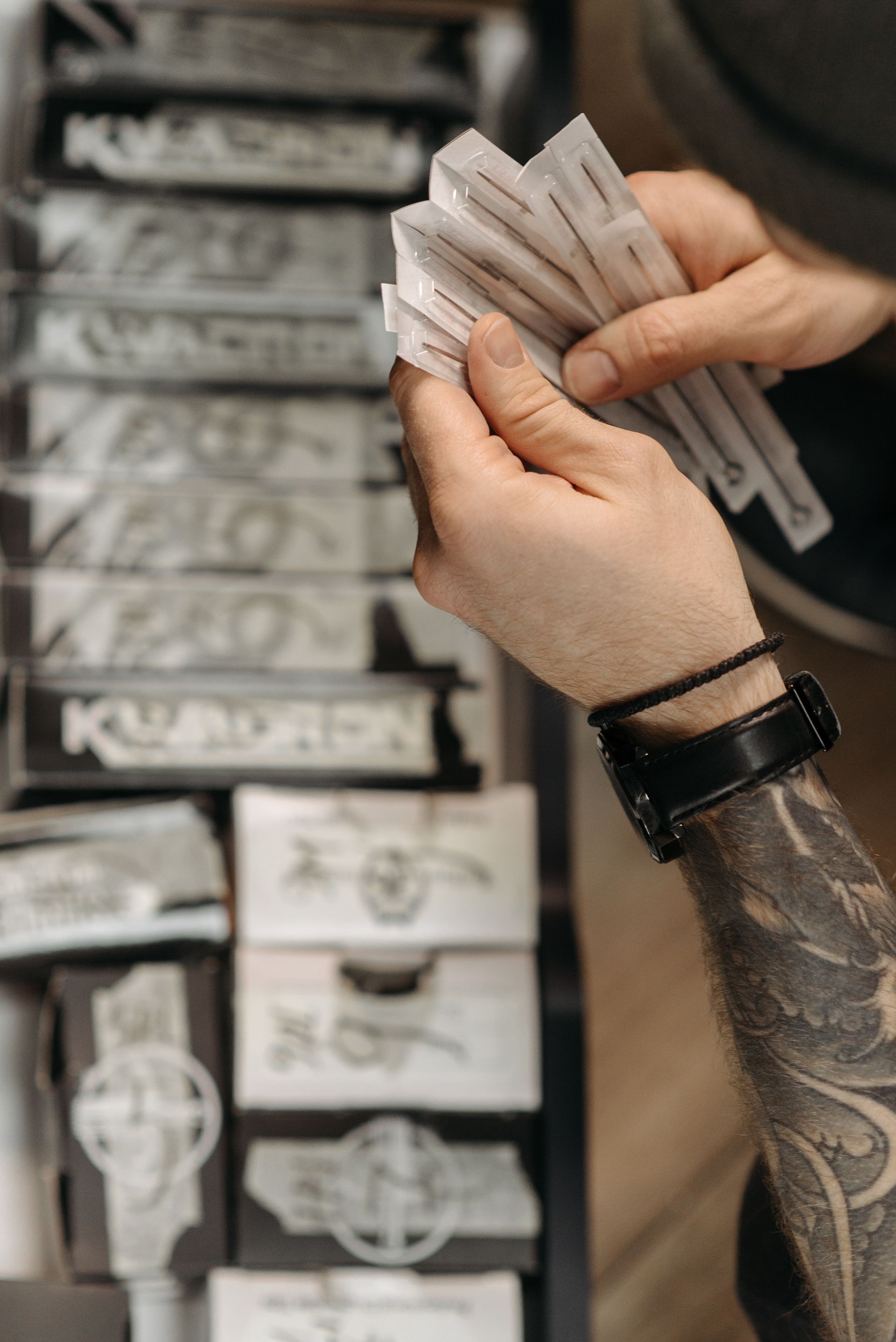
Reference photograph: individually packaged needle cartridges
— CHECKLIST / BEFORE THE FIRST LINE —
Read the needle before you use it
— Packaging is sealed, undamaged and within its use-by date
— The configuration on the label matches the line you plan to pull
— The cartridge suits your machine grip
— Gloves are on before the pack is opened
— A sharps container is within reach of your working hand
— 01 / CONFIGURATIONS —
How needles are grouped
A tattoo needle is several fine points soldered together. The shape of that group is called its configuration, and each shape is made for a different job.
Round liners
Points gathered into a tight circle. This is the main group for outlines and the one fine line artists use most, because it holds a single clean edge.
Round shaders
A looser circle that lays down a softer, fuller mark. It suits bolder lines and small areas of fill rather than delicate detail.
Magnums and flats
Points set in rows. They cover larger areas and blend gradients, so in fine line work they usually support soft shading, not the line itself.
— 02 / CARTRIDGES —
Cartridge needles
The needle comes pre-sealed in its own housing and clicks into a pen-style or cartridge-compatible machine.
— Fast, consistent changes between configurations
— Many include a membrane that helps keep ink out of the grip
— Less handling of the needle itself
— 02 / TRADITIONAL —
Traditional needles
A needle on a long bar, paired with a separate tube and mounted on a coil or compatible rotary machine.
— Direct feel through the machine and tube
— Setup and alignment rely more on the artist
— Needs careful assembly with single-use or properly reprocessed tubes
— 03 / LINE CHARACTER —
Why the needle changes the line
A tighter grouping concentrates the points, so the line reads sharper and more defined. A looser group spreads ink wider and softens the edge. The taper, meaning how gradually each point narrows, affects how smoothly ink flows into the skin. Even so, the needle only sets what the line can be. Hand speed, depth and a steady stretch decide whether it heals clean. That is why needle choice is taught together with technique, never on its own.
— 04 / HANDLING —
Safe handling and disposal
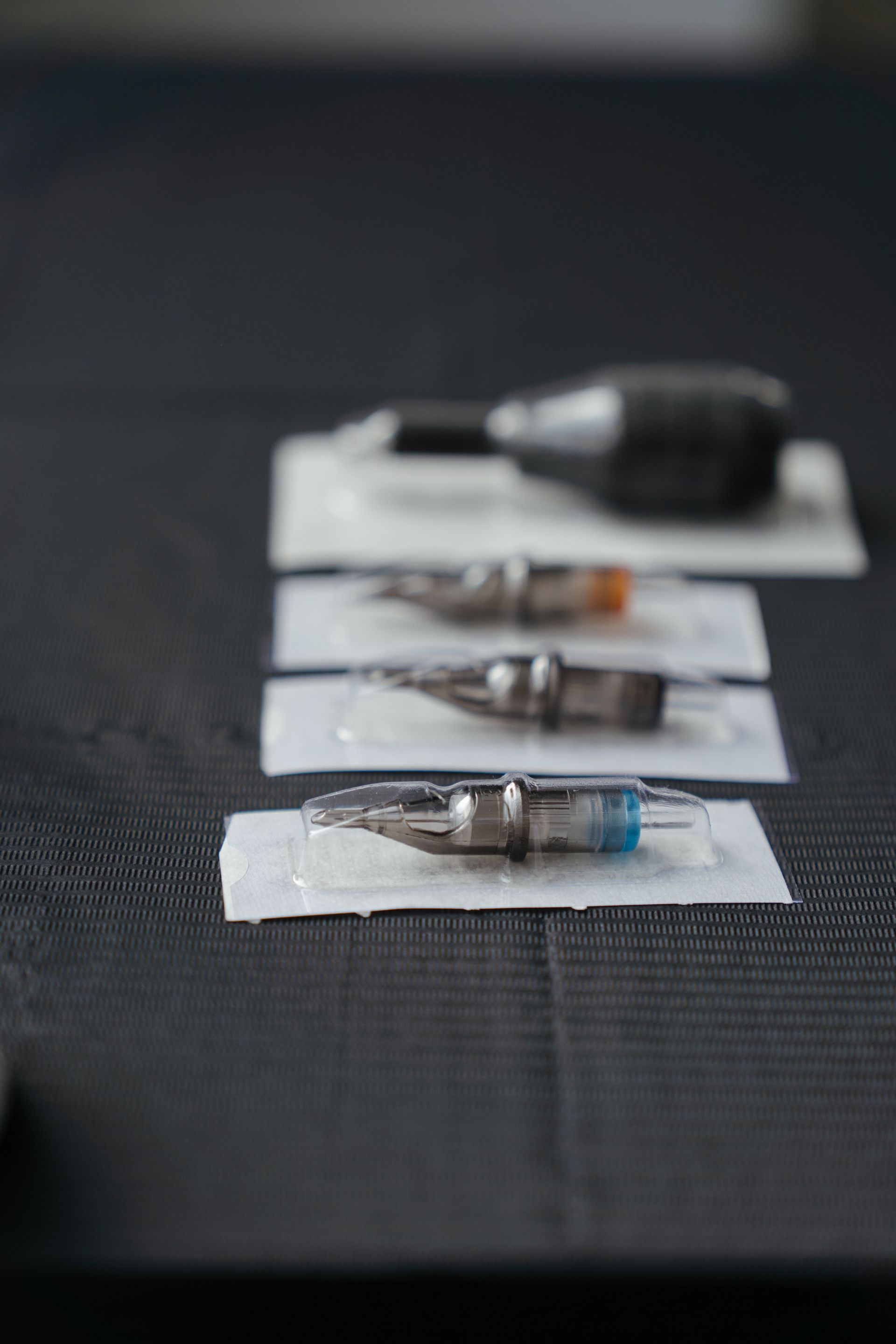
Every used needle is a sharp that has touched broken skin. Treat it that way from the moment the pack opens.
— Open needles in front of the client, on a covered, cleaned surface
— Use each needle or cartridge for one client only
— Never recap, bend or reach past an exposed needle
— Place used sharps straight into an approved sharps container
— Follow the infection control rules that apply to your studio for storage and collection
— RELATED READING —
Needles make sense alongside the machine that drives them and the hand that guides them.